
Video content marketing is the practice of using video to attract, educate, and convert your target audience. Video dominates in 2026 because it holds attention longer than text, communicates emotion and trust faster, and is actively prioritised by social media and search algorithms. Businesses of every size now use video as a core part of their marketing because viewers retain information from video at a significantly higher rate than from written content alone.
Key Takeaways
- According to Wyzowl’s 2026 State of Video Marketing report, 91% of businesses now use video as a marketing tool
- 82% of marketers say video has given them a good return on investment
- Short-form video delivers the highest ROI of any media format, with 49% of marketers ranking it in their top three, according to HubSpot’s 2026 State of Marketing Report
- You do not need expensive equipment to start. A smartphone, natural light, and a clear message are enough for your first videos
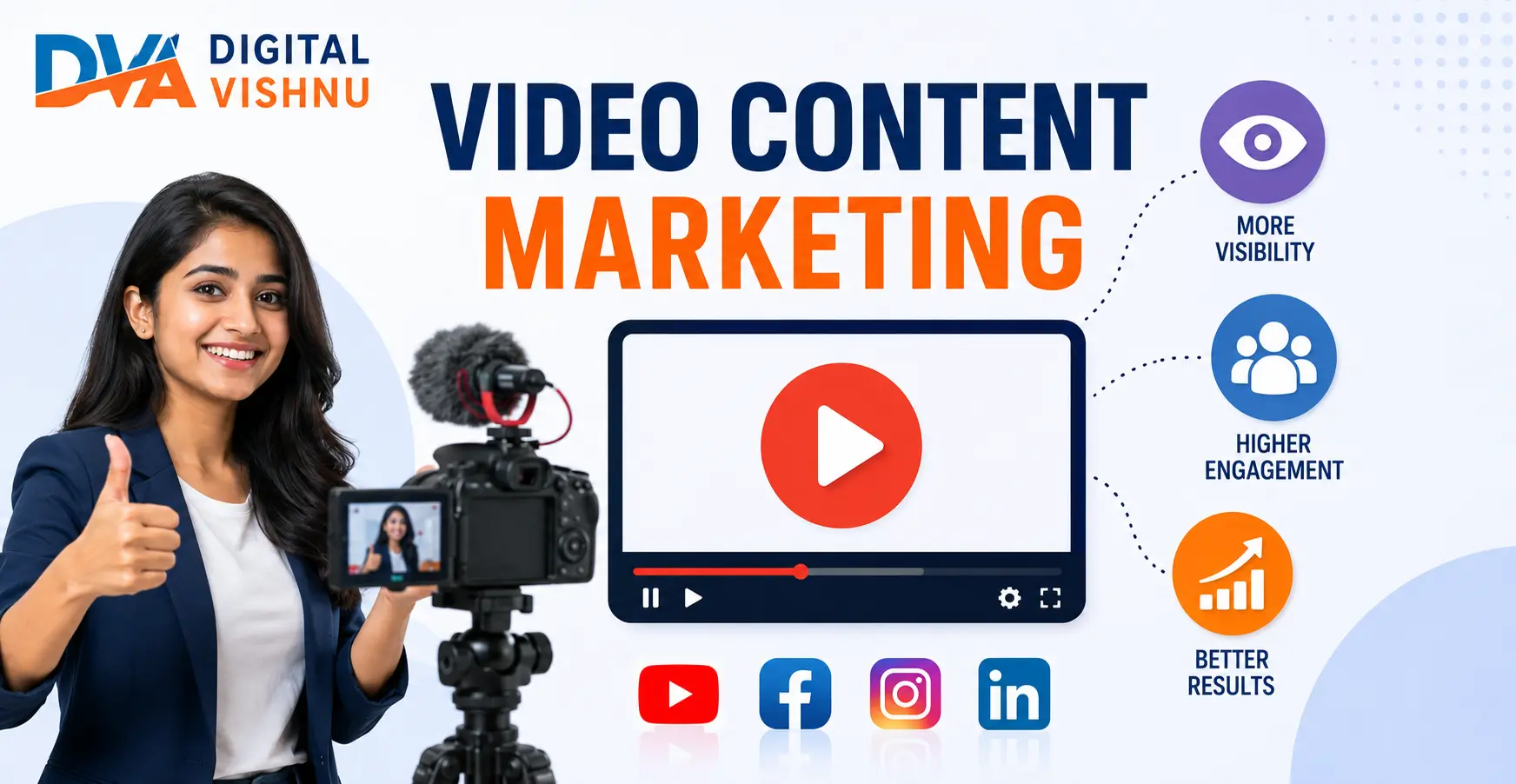
What is Video Content Marketing?
Video content marketing is the strategic use of video to attract, engage, and educate a specific audience, with the goal of building trust and guiding viewers toward a business outcome. Unlike a traditional advertisement, video content marketing focuses on providing genuine value first. It includes tutorials, behind-the-scenes clips, product demonstrations, testimonials, and storytelling videos published on platforms where your audience already spends time.
Most people think of video marketing as expensive television ads or highly produced brand films. That is an outdated picture. In 2026, video content marketing means a business owner recording a 60-second tip on their phone and posting it as an Instagram Reel, a trainer running a 20-minute tutorial on YouTube, or a product team doing a quick demo on LinkedIn. The format, length, and budget are all flexible. What stays constant is the intention: create content that helps your audience and builds your credibility.
If you are new to content marketing in general, our guide on what content marketing is and why every business needs it is a useful starting point before going deeper into video specifically.
Why Video Content Dominates in 2026
Video dominates in 2026 because it is the format that audiences prefer, algorithms reward, and businesses get the best results from. The shift is not a trend. It reflects a fundamental change in how people consume information online. Smartphone penetration in India, faster mobile internet, and platform features designed around video have all made it the default content format for a growing majority of internet users.
The numbers tell a clear story. According to Wyzowl’s 2026 report, 91% of businesses now use video as a marketing tool. That is the highest adoption rate recorded in the 12 years of their annual survey. The same data shows 82% of marketers report a good return on their video marketing investment, and 85% say video has helped them generate leads.
The engagement advantage is equally significant. Social media algorithms on Instagram, YouTube, and LinkedIn actively surface video content to more people because it keeps users on the platform longer. A post with a video earns more organic reach than an image or text-only post on most platforms in 2026, without any additional paid promotion.
There is also a trust dimension. A video that shows your face, your workspace, your process, or your students learning builds the kind of trust that a paragraph of text cannot replicate in the same amount of time. For service businesses, coaches, trainers, and consultants, this is the most important reason to invest in video. People buy from people they trust, and video builds that trust faster than almost any other medium.
Short-Form vs Long-Form Video: Which Should You Focus On?
Short-form video (under 60 seconds) builds reach and discovery. Long-form video (5 minutes and above) builds depth and trust. Both serve a purpose. For beginners, short-form video is the better starting point because it is faster to produce, easier to improve, and currently earns the highest ROI of any media format, according to HubSpot’s 2026 State of Marketing Report. Add long-form video once you are consistent with short content.
| Feature | Short-Form Video | Long-Form Video |
|---|---|---|
| Typical length | 15 seconds to 3 minutes | 5 minutes and above |
| Main platforms | Instagram Reels, YouTube Shorts, LinkedIn | YouTube, your website, LinkedIn |
| Primary goal | Discovery, reach, brand awareness | Trust, education, conversion |
| Viewer intent | Quick entertainment or information | In-depth learning or research |
| Production effort | Low to medium | Medium to high |
| Best for | Growing your audience quickly | Converting an existing audience |
Instagram Reels and YouTube Shorts work together for many Indian businesses and creators. Short clips draw in new viewers, and longer tutorials on YouTube convert them into engaged followers. Our guides on using Reels for business marketing and YouTube marketing for businesses cover the platform-specific tactics in detail.
The 5 Main Types of Video Content That Work for Businesses
The five most effective types of video content for business marketing are: educational or how-to videos, behind-the-scenes content, product and service demos, testimonials and success stories, and brand storytelling videos. Most businesses start with educational videos because they add the most immediate value to a new audience and build credibility faster than any other format.
1. Educational and How-To Videos
These teach your audience one specific thing in one video. A digital marketing trainer sharing a 3-minute video explaining how Instagram’s algorithm works. A gym explaining the correct form for a squat. A lawyer explaining a common mistake in business registration. These videos position you as a trusted expert before a viewer has spent a rupee with your business.
2. Behind-the-Scenes Videos
Rated by Students
4.9/5 Rating. 500+ Students Trust Digital Vishnu Academy for Their Career
Practical training. Real projects. Placement assistance that actually works.
Show your process, your team, your workspace, or a day in your business. Behind-the-scenes content builds personal connection and makes your brand feel human. These are easy to produce because they require no scripting. You record what is actually happening and share it.
3. Product and Service Demo Videos
Show how your product works or how your service delivers results. This is different from a traditional advertisement. A demo video shows the actual process, features, and outcomes, not just a polished tagline. For services and courses, this could be a walkthrough of a class, a sample lesson, or a real client interaction.
4. Testimonial and Success Story Videos
A real student, client, or customer sharing their experience in their own words is one of the most powerful conversion tools in video marketing. Short, specific, and unscripted testimonials outperform written reviews in building trust with a new audience.
5. Brand Storytelling Videos
These explain who you are, why your business exists, and what you believe in. A brand story video is not a sales video. It invites viewers into your world and gives them a reason to care about your brand beyond what you sell. These work particularly well on YouTube and your website homepage.
Which Video Platforms Should You Use in India?
In India, the highest-priority video platforms for most businesses and creators in 2026 are YouTube, Instagram Reels, and YouTube Shorts. LinkedIn video is gaining ground for B2B and professional services. WhatsApp Status is used by many small and local businesses for quick updates to an existing customer base. Start with one platform, master it, then expand. Do not try to be present on every platform at once.
- YouTube: The strongest platform for long-form educational and tutorial content. Videos are indexed by Google and drive search traffic for years. Best for training institutes, consultants, coaches, and service businesses that benefit from in-depth content.
- Instagram Reels: The highest organic reach platform in India for short video content. Best for brand awareness, product showcases, quick tips, and reaching a younger audience.
- YouTube Shorts: Discovery channel for bringing new viewers to your main YouTube channel. Works best when you repurpose clips from longer videos rather than creating entirely new content.
- LinkedIn Video: Growing format for B2B audiences, recruiters, and professionals. Works well for industry insights, career advice, and professional services.
- WhatsApp Status: Used by Indian small businesses to share offers, updates, and behind-the-scenes clips with an existing audience who has already opted in to your contact list.
India’s regional language advantage is worth noting. Research shows that a significant majority of India’s internet users prefer content in their local language. Businesses creating video in Tamil, Telugu, Hindi, Kannada, or other regional languages reach an audience that most English-only content creators entirely overlook.
How to Build Your First Video Content Marketing Strategy
A basic video content marketing strategy takes one week to plan and one month to test. Choose one platform, decide on one content type, commit to a consistent posting frequency, and produce your first four videos before judging results. Strategy without execution is useless. The goal for your first month is to start creating, not to achieve perfection.
- Define your goal. Are you trying to grow a new audience, generate enquiries, or educate existing customers? Your goal determines which type of video and which platform you prioritise. Awareness = Reels and Shorts. Conversions = YouTube tutorials or demo videos.
- Choose one platform to start on. If your audience is primarily young Indians on social media, start with Instagram Reels. If your audience searches for solutions, start with YouTube. Do not spread yourself across three platforms in your first month.
- Plan content around questions, not products. List the 10 most common questions your audience asks about your topic. Each question is a video. This approach ensures your content is genuinely useful rather than promotional from day one.
- Start with what you have. A modern smartphone shoots more than adequate video quality for social platforms. Use natural light from a window, speak clearly, and keep your background tidy. Expensive equipment does not determine the quality of your content. Clarity and usefulness do.
- Batch-record your videos. Set aside 2 to 3 hours and record 4 to 5 videos in one session. Batch recording saves setup time, keeps your energy consistent, and gives you content to post for weeks.
- Repurpose every video. A 10-minute YouTube tutorial can generate a 60-second Reel, a blog post, a series of LinkedIn posts, and a newsletter. Repurposing multiplies your content output without proportionally increasing your production time. Our 30-day content calendar guide includes a simple repurposing framework you can adapt for your video workflow.
Common Video Marketing Mistakes to Avoid
The most damaging video marketing mistakes are waiting until everything is perfect before posting, not adding captions to social media videos, inconsistent publishing, and never reviewing your analytics. Most beginners also make their videos too promotional too early, before they have built any trust with their audience. Each mistake is easy to fix once you know to look for it.
- Waiting for perfect before posting: Your first videos will not be your best. That is normal and expected. The skill of creating video improves fastest through repetition, not through endless preparation. Post your first video and improve from there.
- No captions on social media videos: Research consistently shows that a large percentage of social media videos are watched on mute, particularly on mobile. Captions keep your message accessible to viewers who cannot play sound in public spaces. Most tools and platforms generate captions automatically now.
- No clear call to action: Every video should end with one specific direction for the viewer. Visit your website. Send a message. Book a demo call. Watch the next video. Without a clear CTA, viewers enjoy the content and move on without taking any action.
- Inconsistent posting: Posting 10 videos in one week and then nothing for a month confuses the algorithm and your audience. A consistent schedule of even one video per week outperforms occasional bursts over any 3-month period.
- Not reviewing analytics: Your video tool shows you watch time, drop-off points, click rates on links, and which videos your audience replays. Checking this data monthly tells you exactly what topics and formats your audience values most, so you can create more of what works.
Frequently Asked Questions
What is video content marketing?
Video content marketing is the strategic use of video to attract, educate, and build trust with a specific target audience. Unlike traditional video advertising, it focuses on delivering value first. Examples include how-to tutorials, product demonstrations, behind-the-scenes clips, and customer testimonials published on platforms where the target audience already spends time.
Why is video more effective than text content for marketing?
Video communicates emotion, personality, and trust in ways that text alone cannot. It shows rather than just tells. Social media algorithms also prioritise video because it keeps users engaged on the platform longer. For complex topics, video can demonstrate a process in seconds that would take paragraphs to explain in writing, making it far more efficient for the viewer.
Do I need expensive equipment to start video content marketing?
No. A modern smartphone records in high definition, which is more than adequate for all social media platforms. What matters most is good lighting (a window provides free natural light), clear audio (record in a quiet room), and a focused message. Most marketers who consistently create video content started with nothing more than their phone and improved their setup gradually over time.
How long should a marketing video be?
The right length depends on the platform and the content type. For Instagram Reels and YouTube Shorts, 30 to 60 seconds is ideal. For educational YouTube content, 8 to 15 minutes works well for in-depth topics. The guiding principle is to make the video as long as it needs to be to fully answer the question or complete the demonstration, and no longer.
What type of video content performs best for Indian businesses?
Educational and how-to videos in regional languages perform extremely well for Indian businesses and creators. Content in Tamil, Telugu, Hindi, Kannada, and other regional languages reaches a large audience that most English-only content cannot access. Behind-the-scenes content and real customer testimonials also convert well for local service businesses because they build personal trust quickly.
How often should I post video content?
Consistency matters more than frequency. One video per week published on a reliable schedule outperforms three videos one week and none the next, over any 60-day period. Start with one video per week, batch-record to maintain consistency, and only increase frequency once you can sustain the pace without reducing quality or stopping entirely.
Can small businesses do video content marketing with no budget?
Yes. The platforms are free. A smartphone is the only required equipment. Free editing apps like CapCut handle all the basic editing, captions, and transitions needed for social media video. The investment is your time, not money. Many small businesses in India have built significant audiences and generated consistent enquiries using only a phone and free editing tools.
Start Creating Video Content Today
Video content marketing is not optional in 2026. It is where your audience’s attention already is, where the algorithms direct organic reach, and where businesses see the clearest return on their content investment. The barrier to entry has never been lower. You do not need a studio, a production crew, or a large budget to start.
Pick one platform. Pick one video type. Answer one question your audience is already asking. Record it on your phone. Post it. That is how every successful video marketing strategy began.
If you want structured training in video content marketing alongside SEO, social media strategy, paid advertising, and other practical digital marketing skills, explore the digital marketing course at Digital Vishnu Academy in Coimbatore. You will learn how to plan, produce, and distribute video content as part of a complete, results-driven digital marketing strategy.
Related Articles