
Using Reels for business marketing means creating short vertical videos — typically 15 to 90 seconds long — on Instagram and Facebook to reach new audiences, build brand awareness, and drive enquiries or sales without relying on paid advertising. Reels work because the platform actively distributes them to people who do not already follow your account, giving your business far greater organic reach than photos or text posts. Any business can create effective Reels using a smartphone, good lighting, and a clear message.
Reels are the single highest-reach content format on Instagram in 2026. Unlike photos and carousels that are shown primarily to your existing followers, Reels are actively pushed to non-followers through the Instagram Explore page and the dedicated Reels feed. For a business that wants organic growth without an advertising budget, Reels are the fastest and most reliable route to reaching a new audience on Meta’s platforms.
For businesses in India — whether a small shop in Coimbatore, a coaching institute in Chennai, or a service provider targeting pan-India clients — Reels offer a level playing field. A well-made Reel from a business with 200 followers can reach tens of thousands of relevant viewers if it delivers genuine value and hooks the audience in the first three seconds. This guide explains exactly how to make that happen.
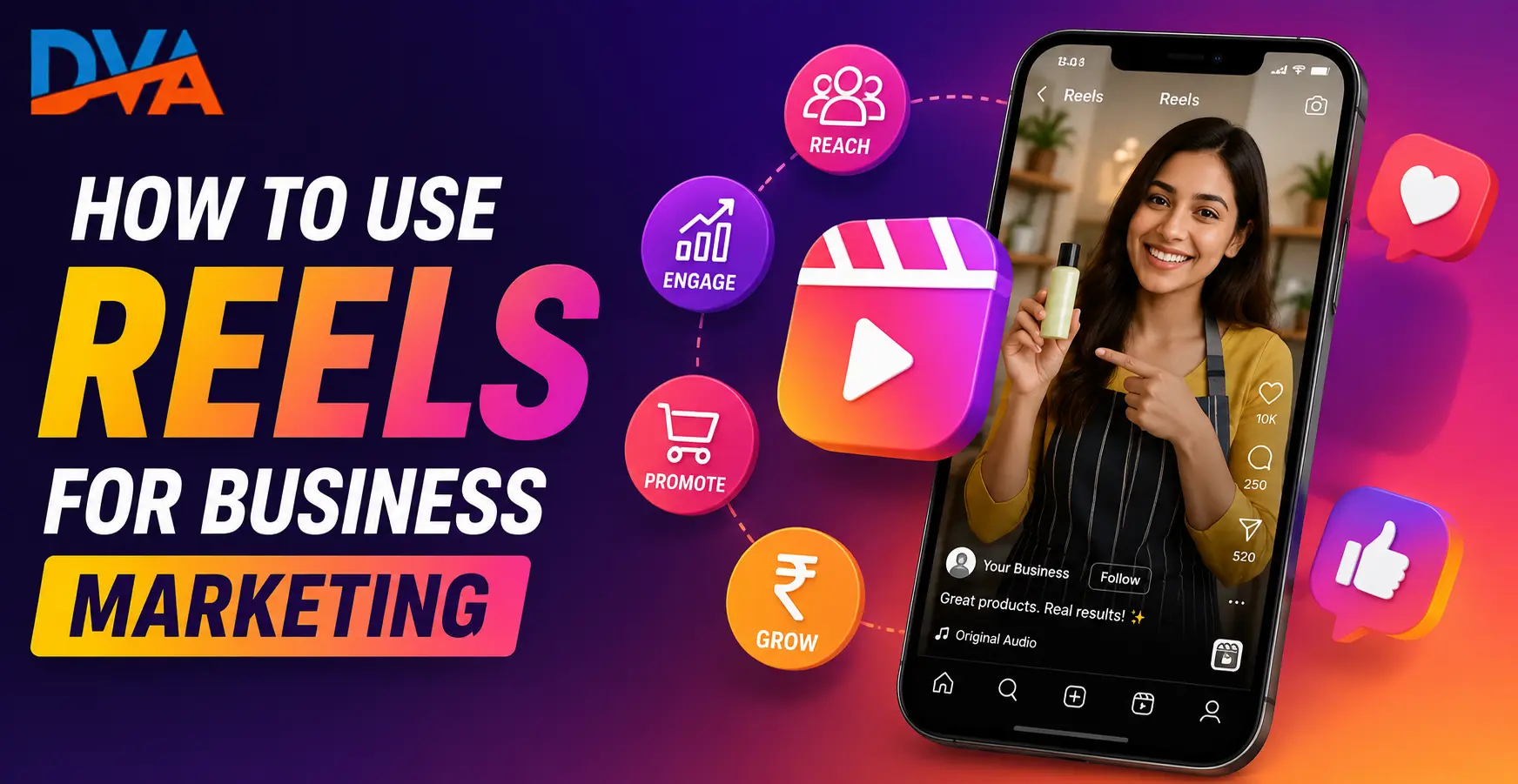
What Are Reels and Why Do They Matter for Business in 2026?
Meta (the company that owns both Instagram and Facebook) introduced Reels in direct response to the growth of short-form vertical video globally. The format has now become central to how both platforms distribute content. In 2026, Reels consistently receive significantly more organic reach than static image posts or carousels on the same accounts — because the algorithm actively promotes Reels to non-followers to keep users engaged with fresh content.
For businesses, this matters enormously. Traditional organic Instagram growth through photos and text posts is slow because those formats are shown mainly to existing followers. Reels break through that barrier. Every Reel you publish has the potential to be discovered by someone who has never heard of your business but fits your exact target audience.
Why Reels Outperform Other Content Formats for Organic Business Reach
| Content Type | Primary Audience Reached | Best For | Production Effort |
|---|---|---|---|
| Reels | Followers + non-followers | Discovery, reach, brand awareness | Medium (planning + filming + edit) |
| Carousel post | Mostly existing followers | Education, saves, depth of content | Medium (design + copywriting) |
| Static image post | Mostly existing followers | Announcements, offers, quotes | Low (design only) |
| Story | Existing followers only | Daily updates, polls, DM triggers | Low (quick capture) |
| Live video | Followers + some non-followers | Real-time engagement, Q&As | High (real-time planning) |
The table above reflects the typical organic performance pattern for business accounts in 2026. Reels are the clear priority if your goal is to reach new potential customers without paid advertising. Use Stories and carousels to deepen relationships with your existing followers while Reels bring in new ones.
How to Plan a Reels Content Strategy for Your Business
A practical Reels content mix for a business account uses three types of video:
- Educational Reels (40%): Teach your audience something useful related to your industry. These build authority and get saved and shared. Example: “3 mistakes to avoid when running Facebook Ads” or “How to choose the right digital marketing course.”
- Behind-the-scenes and culture Reels (30%): Show your process, your team, your workspace, or what it looks like to use your product or service. These build trust and humanise the brand. Example: “A day in our training centre in Coimbatore” or “How we prepare for a student batch.”
- Promotional Reels (30%): Show your product, service, or offer directly. These drive enquiries and sales. Example: “Our digital marketing course now has three batches — here is what you will learn” or a before-and-after showing a result your business delivers.
Plan your Reels in advance using a content calendar rather than deciding what to film on the same day you want to post. Our free social media calendar guide shows you how to organise your entire month’s content — including Reels — in a simple Google Sheets template.
The Anatomy of a High-Performing Business Reel
The Hook (seconds 0–3): The opening seconds determine whether a viewer stays or scrolls. Effective hooks include: a surprising statement (“Most businesses waste their Instagram reach by doing this one thing”), a direct question (“Are you making this Reels mistake?”), a bold visual action that makes the viewer curious, or a specific promise (“I will show you how to get 10x more reach from your next Reel in 60 seconds”). Never start with your logo, your company name, or a long introduction.
The Value Delivery (middle): Keep your promise from the hook. Deliver the information, the tip, the story, or the result you promised clearly and efficiently. Cut out any content that does not directly serve the promise you made in the first three seconds. Every second that does not add value risks losing a viewer.
Digital Vishnu Academy
Join 500+ Students Already Building Their Digital Marketing Career
Live projects. AI tools. 100% placement support. Batches in Coimbatore and online.
The Call to Action (final 5–10 seconds): Tell the viewer exactly what to do next. Examples: “Follow us for more social media tips,” “Save this Reel so you can use it later,” “DM us the word ‘course’ to get details,” or “Visit the link in bio to enrol.” Choose one clear CTA per Reel — multiple asks dilute the action rate.
Caption: Write a caption that adds context without repeating the Reel’s content verbatim. Include a question at the end to encourage comments. Add 3–5 relevant hashtags — avoid overloading with 20–30 generic hashtags, which add no value and look spammy.
Audio: Trending audio (sounds or songs that are widely used on Instagram at a given time) receives algorithmic boost because users interact more with familiar sounds. Use trending audio when it fits naturally. For educational or talking-head Reels where your voice is the main content, original audio is perfectly fine and can actually build brand recognition over time.
10 Reels Content Ideas for Business Marketing
- Quick tip or how-to: Share one practical tip relevant to your industry in 30–60 seconds. “How to write an Instagram bio that actually gets you DMs” or “3 quick tips for a better LinkedIn profile.”
- Common mistake breakdown: “The 3 mistakes most small businesses make on social media” — positions you as the expert who knows what goes wrong and how to fix it.
- Before and after: Show the transformation your product or service delivers. Works for interior design, beauty, digital marketing results, food, or any field with a visible outcome.
- Day in the life: Show what it looks like to work in your business or industry. Builds authenticity and humanises the brand.
- Student or customer story: Share a real result or experience from a happy customer or student in a conversational, non-scripted way.
- Myth vs fact: “Myth: You need a huge following to make money on Instagram. Fact: You need the right audience, not a large one.” Quick, memorable, and highly shareable.
- Tool or resource recommendation: “The free tool I use to schedule all my social media in 30 minutes per week.” Educational and useful — drives saves and shares.
- Answer a FAQ: Pick the question your customers or enquiries ask most often and answer it on camera in 45–60 seconds. Builds authority and pre-qualifies potential buyers.
- Behind the scenes: Show your process, your team, your workspace, or your creative workflow. Creates connection and trust without requiring heavy production.
- “Things I wish I knew” format: “5 things I wish I knew before starting digital marketing” — relatable, aspirational, and works for almost any industry or professional service.
How to Film and Edit Reels Without Professional Equipment
Shooting tips:
- Film vertically at 1080 x 1920 pixels (9:16 ratio) — this is the native Reels format.
- Use natural light from a window in front of you, not behind you. Backlit shots look dark and amateur.
- Use a phone stand or tripod (even a basic ℽ300 clip tripod works) to keep the shot steady.
- Record in a quiet room and stay close to your phone if speaking directly to camera. Distance increases background noise and reduces clarity.
- Record three to four short clips for each Reel rather than one long continuous take — this gives you editing flexibility.
Editing tools:
- CapCut (free): The most widely used Reel editing app in India. Auto-captions, templates, effects, and transitions. Available for Android and iOS.
- Instagram’s native editor: Useful for adding music, text overlays, and basic cuts directly inside Instagram before publishing. Good enough for simple Reels without complex edits.
- Canva Video (free plan available): Useful for creating text-heavy or slideshow-style Reels with brand colours and logos.
Optimal Reels duration in 2026: For educational and talking-head Reels, 30–60 seconds is the sweet spot. Shorter Reels (under 15 seconds) work well for quick tips or single-idea formats. Reels over 90 seconds tend to lose viewers unless the content is genuinely compelling throughout. Always keep the opening 3 seconds tight — if you cannot hook the viewer immediately, duration does not matter.
How to Measure Reels Performance for Business
- Reach: The number of unique accounts that saw your Reel. Compare this to your follower count — if your Reel reaches significantly more people than your follower count, the algorithm is distributing it to non-followers, which is the discovery effect you are trying to achieve.
- Plays: Total views including repeat views from the same account. A high ratio of plays to reach suggests people are rewatching, which is a strong positive signal.
- Saves: People who saved your Reel for later. Saves signal that the content is useful enough to return to — this is one of the strongest engagement signals Instagram uses to judge content quality.
- Shares: People who sent your Reel to others. Shares are the most powerful form of distribution because each share puts your content in front of an entirely new network.
- Profile visits from Reel: The number of people who clicked through to your profile after watching. This is your conversion metric — it shows how many viewers your Reel turned into potential followers or customers.
Access Reels Insights by tapping the three-dot menu on any published Reel and selecting “View Insights.” Review your analytics after every Reel and note what the top-performing ones have in common — topic, format, hook type, duration, or audio. Create more of what your analytics confirm is working.
For a broader understanding of how to grow your Instagram presence beyond Reels, our Instagram growth guide for business pages covers the complete strategy — including profile optimisation, content mix, and engagement tactics.
Common Reels Mistakes Businesses Make in 2026
- No hook in the first three seconds: Starting with a logo animation, company name, or slow build-up. Viewers decide whether to keep watching within the first two to three seconds — if nothing grabs them immediately, they scroll on and the algorithm stops promoting your Reel.
- Only posting promotional content: Reels that only advertise a product or service without providing any value to the viewer rarely get saved or shared. Promotional Reels should make up no more than 30% of your Reels output.
- Posting inconsistently: Publishing three Reels in one week and then nothing for three weeks confuses the algorithm and your audience. The algorithm rewards accounts that post consistently — even two to three Reels per week is better than seven in one week followed by silence.
- Ignoring captions and subtitles: A significant portion of Instagram users watch Reels on mute — especially in public places. Reels without on-screen text or auto-captions lose these viewers immediately. Add text overlays or use CapCut’s auto-caption feature for every Reel where you are speaking.
- Using copyrighted music without checking: Using copyrighted music in a business account Reel can result in the sound being muted or the Reel being removed. Business accounts have different music licensing rules from personal accounts. Use Instagram’s built-in music library (filtered for commercial use) or royalty-free audio to avoid this issue.
- No call to action: Ending a Reel without telling the viewer what to do next. Every business Reel should end with one specific, clear action — follow, save, DM, or visit the link in bio.
How Reels Fits Into Your Broader Social Media Strategy
One of the most efficient Reels strategies for a business is to repurpose a single piece of content across multiple platforms. A Reel published on Instagram can be shared directly to Facebook (where it appears as a Facebook Reel and reaches an entirely separate audience), downloaded and republished on YouTube as a Short, and converted into a LinkedIn video post. One filming session produces content for four platforms — significantly reducing the time investment per piece of content.
For a complete framework on how Reels, carousels, Stories, and other content formats fit together in a weekly plan, our social media marketing strategy guide for beginners covers the full content mix and how to allocate your time and effort across platforms. And if you want to learn short-form video strategy, content creation, and social media marketing as a professional career skill, our social media marketing course in Coimbatore covers all of this with live practice sessions and real campaign projects.
Frequently Asked Questions
How long should a Reel be for business marketing in 2026?
For most business Reels, 30 to 60 seconds is the optimal duration in 2026. This is long enough to deliver a complete tip, story, or demonstration but short enough to maintain viewer attention throughout. Quick single-tip Reels under 15 seconds can perform well when the concept is simple and the hook is very strong. Reels over 90 seconds tend to see significant viewer drop-off unless the content is exceptionally compelling or the account already has a highly engaged audience.
How many Reels per week should a business post?
Three to five Reels per week is the recommended starting target for a business account that wants to grow its organic reach in 2026. Posting fewer than two Reels per week produces slow algorithmic growth because the algorithm needs consistent output to understand your content and identify the right audience for it. If five Reels per week is not achievable with your current capacity, start with three and maintain that consistently for 90 days before evaluating results.
Can I repost the same Reel on Facebook and Instagram?
Yes. You can cross-post a Reel from Instagram to Facebook, and it will appear in the Facebook Reels feed, reaching a separate audience from your Instagram followers. Instagram also allows you to set cross-posting automatically when publishing. Additionally, you can download your Reel and republish it on YouTube Shorts with a different caption optimised for YouTube search. Cross-posting one Reel to multiple platforms multiplies your reach without requiring additional filming time.
Do Reels work for B2B businesses or only B2C?
Reels work for B2B businesses as well, though the approach differs from B2C. B2B Reels perform best when they showcase expertise, share industry insights, or humanise the people behind the business — rather than promoting products or prices directly. LinkedIn video and YouTube are often stronger platforms for B2B content than Instagram Reels, but Instagram Reels can still be highly effective for B2B service providers, consultants, agencies, and training institutes whose decision-makers are active on Instagram.
What is the best time to post Reels for a business account in India?
Based on general Indian social media usage patterns, posting Reels between 7 PM and 9 PM on weekdays and between 10 AM and 12 PM on weekends tends to produce higher initial engagement in India. However, the single most reliable way to find the best posting time for your specific audience is to check your Instagram Insights under Audience — it shows the hours when your current followers are most active. Post 30 minutes before your peak activity window to give the algorithm time to start distributing your Reel before the traffic peak.
Should I use hashtags on Reels in 2026?
Hashtags play a smaller role in Reels discovery in 2026 than they did in earlier years, as Instagram’s algorithm now relies more on content analysis and viewer behaviour signals than on hashtag matching. Use 3 to 5 highly relevant hashtags rather than 20 to 30 generic ones. Focus your hashtag selection on specific niche terms (such as your city, industry, or content topic) rather than broad tags with hundreds of millions of posts, where your Reel will be buried immediately.
Can I use Reels to generate business leads directly?
Yes, but indirectly rather than directly. Reels generate awareness and drive profile visits — the actual lead conversion typically happens through your bio link, your direct message inbox, or a call-to-action that directs viewers to a landing page or WhatsApp. The most effective Reels lead-generation sequence is: Reel hook → viewer watches full video → viewer visits profile → bio link or DM prompt converts the visitor into a lead. Include a specific DM trigger word (such as “DM us the word COURSE for details”) in Reels where you want to drive enquiries.
Sources and Further Reading
- Instagram Reels for Business — Meta for Business — Official Meta resource on Reels strategy, best practices, and creative guidance for business accounts.
- Reels on Instagram — Instagram Help Centre — Official Instagram documentation on Reels features, music licensing for business accounts, and publishing settings.