
Businesses that publish helpful, relevant content attract more customers than those that rely on ads alone. Content marketing is the strategy behind this and it is one of the most cost-effective ways for any business to grow online.
This guide explains what content marketing is, how it works, the different types, and why your business cannot afford to ignore it in 2026.
Quick Answer: Content marketing is a strategy where businesses create and share useful, relevant content like blog posts, videos, and social media posts to attract, educate, and convert their target audience. Instead of interrupting people with ads, content marketing earns attention by providing real value. Over time, it builds trust, drives organic traffic, and generates consistent leads without ongoing ad spend.
Key Takeaways
- Content marketing earns customer attention through useful content, not paid interruptions
- Blog posts, videos, social media, and emails are all forms of content marketing
- It builds long-term organic traffic that continues after you stop paying for ads
- It works for businesses of every size, including small and local businesses in India
- The biggest mistake is creating content without a clear audience or defined strategy
What is Content Marketing? A Simple Definition
Content marketing is a strategic approach to creating and distributing valuable, relevant, and consistent content to attract and retain a clearly defined audience with the goal of driving profitable customer action. In simple terms: instead of selling to people, you help them first. That help builds the trust that eventually turns into business.
The Content Marketing Institute defines it as a strategic marketing approach focused on creating and distributing valuable, relevant, and consistent content to attract and retain a clearly defined audience. This definition has guided marketers worldwide for over a decade.
Think of it this way. When someone searches for how to fix a leaking tap and a plumbing company’s blog comes up with a genuinely helpful answer, that is content marketing at work. The reader was not looking for a plumber. But by the time they finish reading, they trust the business. When they do need a plumber, they already know who to call.
Content marketing is not a shortcut. It is a long-term investment that pays off as your content library grows. It is also a core part of a broader digital marketing strategy that every modern business should understand.
How Does Content Marketing Actually Work?
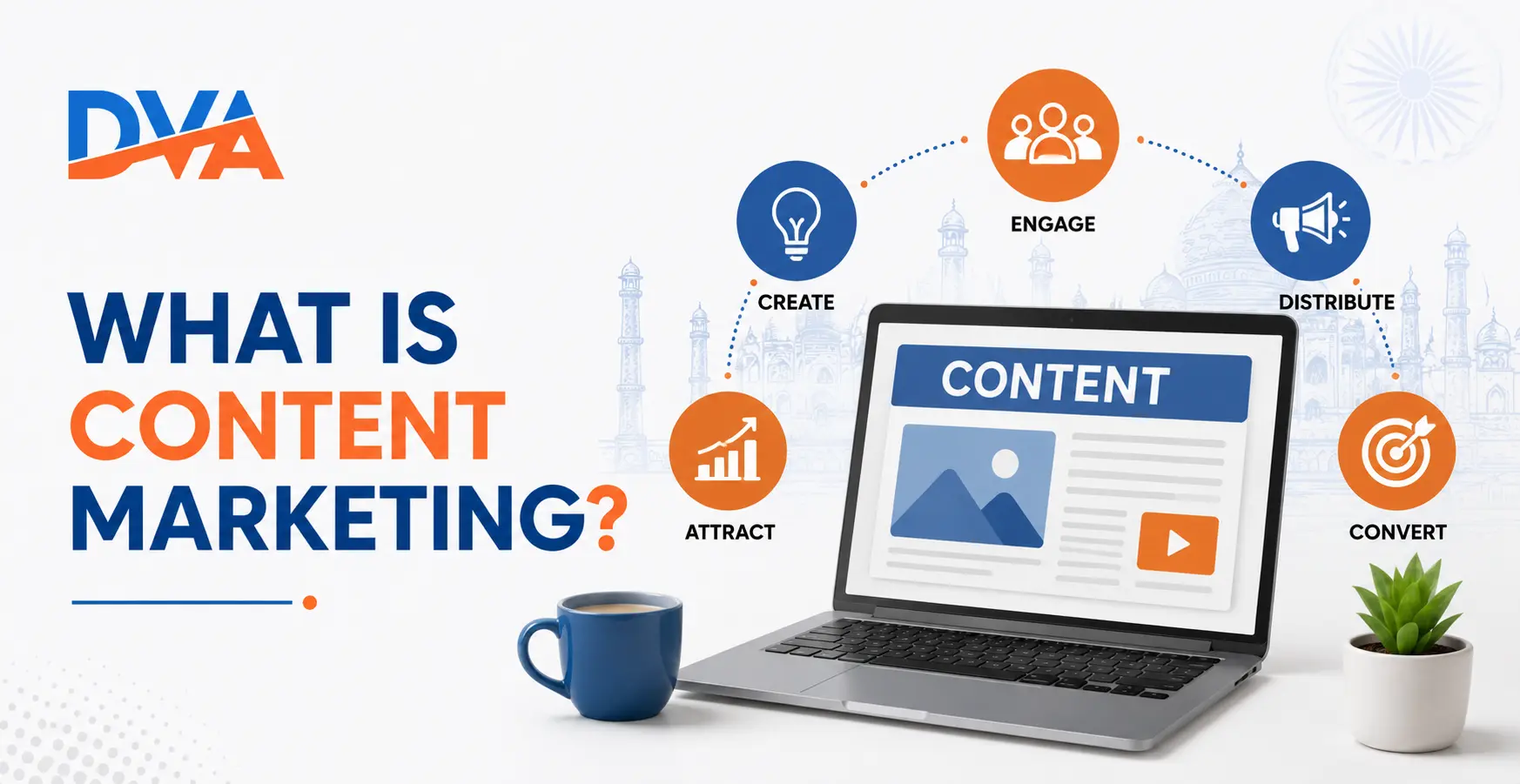
Content marketing works by attracting potential customers through useful content, building trust over time, and converting that trust into enquiries, purchases, or sign-ups. The process follows three stages: attract (bring in the right audience), engage (build a relationship through value), and convert (turn readers into customers).
Here is how the cycle works in practice:
- Attract: A potential customer searches for a question online. Your blog post, video, or infographic appears in the results and gives them a useful answer.
- Engage: They find your content helpful. They visit your website, read more, subscribe to your email list, or follow your social media page.
- Convert: Over time, they trust your brand. When they are ready to buy, hire, or enrol, they think of you first.
This is fundamentally different from traditional advertising. A paid ad stops the moment your budget runs out. A useful blog post or YouTube video can attract customers for years after it was published, at no additional cost.
Types of Content Marketing
Content marketing covers any format that delivers value to your audience. The most common types are blog posts, videos, social media content, email newsletters, infographics, podcasts, and e-books. Which type works best depends on your audience’s preferences and the platforms they already use.
Blog posts and articles: Long-form written content that answers questions your audience is searching for. Blog posts are excellent for SEO because search engines index them and show them to people searching for related topics. Learn how to create effective written content with our guide on how to write SEO-friendly blog posts.
Video content: YouTube videos, Instagram Reels, Facebook videos, and YouTube Shorts. Video is one of the most consumed content formats in India. A short tutorial, product demonstration, or explainer video can reach thousands of people organically without any ad spend.
Social media content: Posts, carousels, Stories, and Reels published on Instagram, Facebook, and LinkedIn. Social content builds community, reaches new audiences, and drives traffic back to your website. A clear social media marketing strategy ensures your content reaches the right people consistently.
Email newsletters: Regular emails sent to your subscriber list with useful tips, updates, or offers. Email is one of the highest-ROI content formats because you own the audience directly and no algorithm stands between you and them.
Infographics and visual content: Data, comparisons, or processes presented visually. Infographics are easy to share and simple to understand at a glance, making complex information accessible.
Podcasts: Audio content that lets your audience learn from you while commuting, exercising, or doing chores. Podcasts are growing rapidly in India and remain relatively low-competition for most niches.
E-books and downloadable guides: In-depth resources on a specific topic. These are often used as lead magnets, offered for free in exchange for an email address, building your subscriber list while delivering value.
Webinars and live sessions: Interactive live content that lets you teach, answer questions, and build relationships with your audience in real time. These are particularly effective for education and training businesses.
Why Every Business Needs Content Marketing
Every business needs content marketing because buying behaviour has changed. Most people research online before they buy, enrol, or hire anyone. If your business does not appear when people search for solutions you provide, you lose that customer to a competitor who does. Content marketing is how you show up in those searches consistently and credibly.
Ready to start?
Learn Digital Marketing with Live Projects at Digital Vishnu Academy, Coimbatore
SEO, Google Ads, Social Media, AI Tools and more. Job-ready in 3 months.
It builds trust before the sale: Customers today research extensively before making decisions. When your content answers their questions honestly and helpfully, you establish authority and trust. People buy from businesses they trust, and trust is built long before the first conversation.
It drives organic traffic: Every blog post, video, or resource you publish is a potential entry point for a new visitor. Unlike paid ads that stop driving traffic the moment you stop spending, good content keeps working for months and years.
It is more cost-effective than advertising alone: Creating a blog post or video costs time and effort once. Paid ads require continuous spending for continuous results. Content marketing builds an asset that compounds over time while your ad budget stays flat or grows.
It generates qualified leads: People who find your content through a specific search are already looking for what you offer. This makes them far more likely to convert than someone who saw a random advertisement while browsing.
It supports every other marketing channel: Content fuels your social media posts, your email newsletters, your paid ads, and your SEO. Without content, these channels have nothing meaningful to share. Google’s own helpful content guidance confirms that original, expert, audience-first content is what earns and retains strong search visibility.
Content Marketing vs Traditional Advertising
Traditional advertising interrupts people with a message they did not ask for. Content marketing earns attention by giving people something genuinely useful. The key difference is trust: ads tell people to buy; content helps people decide. Both have a role, but content marketing builds a lasting audience while advertising buys only temporary visibility.
| Feature | Content Marketing | Traditional Advertising |
|---|---|---|
| Cost structure | One-time creation, long-term results | Ongoing spend for ongoing results |
| Trust building | High: educates and helps the audience | Low: interrupts rather than helps |
| Longevity | Content can rank and attract for years | Stops the moment budget stops |
| Audience relationship | Builds loyal, engaged audience over time | Reaches but does not retain audience |
| Lead quality | High: visitors are already searching | Variable: broad demographic targeting |
| Best used for | Long-term brand, organic traffic, leads | Short-term awareness, promotions, scale |
Both approaches have value. Most successful businesses use content marketing and paid advertising together for the best results.
How to Start a Content Marketing Strategy in 5 Steps
Starting a content marketing strategy comes down to five actions: know your audience, choose the right content format for that audience, plan what to create and when, publish useful and specific content consistently, and measure what works so you can improve. Most businesses fail at step one by creating content without first understanding who it is for.
Step 1: Define your audience clearly
Who are you creating content for? What problems do they have? What questions are they asking online? The more specific your audience definition, the more useful and targeted your content becomes. A Coimbatore textile business targeting procurement managers needs completely different content than a bakery targeting local families.
Step 2: Choose your content formats
Do not try to be everywhere at once. Pick one or two formats your audience actually uses. If your audience is on YouTube, start with video. If they search Google for answers, start with a blog. If they are professionals, consider LinkedIn articles. Match the format to where your audience already spends time.
Step 3: Build a content calendar
Consistency matters more than volume. Publishing one high-quality blog post or video per week beats publishing five pieces and then going silent for a month. Plan topics a month in advance so you are never scrambling for ideas the day before you need to publish.
Step 4: Create genuinely useful content
Every piece of content should answer a specific question, solve a specific problem, or teach a specific skill your audience cares about. Avoid generic or self-promotional content. Specific, helpful content builds trust. Generic content gets ignored. Tools that help you plan and distribute content are covered in our guide on social media scheduling tools for small businesses.
Step 5: Measure and improve
Use Google Analytics, Google Search Console, and platform insights to track which content performs best. Look at page views, time on page, search rankings, and enquiries generated. Double down on what works and stop doing what does not.
Common Content Marketing Mistakes to Avoid
The most common content marketing mistake is creating content without a strategy: publishing without knowing who it is for, what problem it solves, or how it will reach the right audience. The second biggest mistake is stopping too soon. Most content takes 3 to 6 months to begin showing measurable results.
Creating content without audience research: If you do not know what questions your audience is asking, your content will not show up when they search. Start with keyword research and audience insight before writing a single word.
Focusing on promotion instead of value: Content that only talks about your product drives people away. Content that genuinely helps people draws them in. Aim for at least 80% helpful content and no more than 20% promotional content in your overall mix.
Inconsistency: Posting 10 articles and then nothing for two months signals to both readers and search engines that your site is not active. Set a schedule you can maintain, even if it means starting with just one post per week.
Ignoring content distribution: Publishing content without promoting it is like opening a shop no one can find. Share your content on social media, in email newsletters, and through relevant online communities so new readers can discover it.
Not measuring results: Content marketing without measurement is guesswork. Track which topics drive the most traffic, which formats generate the most enquiries, and which keywords you are ranking for. Then improve your strategy based on real data.
Is Content Marketing Worth It for Small Businesses in India?
Yes. Content marketing is especially valuable for small businesses in India because it levels the playing field. A small business in Coimbatore that publishes genuinely useful content can attract customers who would never see a traditional newspaper ad or billboard. The cost is lower than paid advertising, and the results grow over time rather than stopping when the budget runs out.
Small businesses often assume content marketing is only for large brands with dedicated marketing teams. This is a misconception. The advantages for small businesses are significant:
- Lower barrier to entry: a blog, YouTube channel, or social media page costs very little to start
- Local audience advantage: a Coimbatore business creating content about local topics faces less competition than a national brand targeting broader terms
- Trust at scale: one well-researched article or video can reach thousands of potential customers without any ad spend
- Supports word-of-mouth: when customers share your helpful content, you reach new audiences you could not buy with advertising
A complete digital marketing strategy for Coimbatore businesses almost always includes content marketing as a foundational pillar alongside SEO, social media, and email marketing.
If you want to learn how to create and execute a content marketing strategy with practical training, Digital Vishnu Academy’s digital marketing course in Coimbatore covers content marketing, SEO, social media, and more with hands-on project work.
Related Guides You Might Like
Frequently Asked Questions
What is the main goal of content marketing?
The main goal of content marketing is to attract and retain a specific audience by consistently providing valuable, relevant information rather than advertisements. Over time, this builds trust and authority, which leads to profitable customer actions such as purchases, enquiries, sign-ups, or referrals. It is a long-term strategy, not a quick-win tactic.
Is content marketing the same as SEO?
No, but they work closely together. SEO is the practice of optimising content and website structure so search engines can find and rank your pages. Content marketing is the strategy of creating valuable content for your audience. Good content marketing supports SEO by giving search engines useful, relevant content to index and show to searchers who are looking for your topic.
How long does content marketing take to show results?
Most content marketing strategies take 3 to 6 months to show measurable results in terms of organic traffic and search rankings. Results then compound as you publish more content and earn more authority. Businesses that start today and publish consistently will see meaningful results within 6 to 12 months. It is a long-term investment that pays back progressively.
Can small businesses in India do content marketing on a limited budget?
Yes. Content marketing is one of the most budget-friendly marketing strategies available. A blog, social media page, or YouTube channel costs very little to start. The main investment is time and skill. Small businesses in India can begin with one blog post per week or one video per week and build a real audience without significant ad spend.
What type of content works best for Indian audiences?
Video content, especially short-form video in Hindi or regional languages, performs very well with Indian audiences. Educational content that answers practical questions also does well in English. Locally relevant content that addresses specific city or industry context often outperforms generic national content because it has less competition and more specific relevance for the target reader.
Do I need to be a professional writer to do content marketing?
No. You need to understand your audience, know your subject well, and communicate clearly. Many successful content creators write in plain, conversational language. Focus on being genuinely helpful rather than sounding impressive. As your skills grow, your content quality improves. AI writing tools can help you draft and structure ideas, provided the final content is original, accurate, and adds real value.
What is the difference between content marketing and social media marketing?
Content marketing is the broader strategy of creating valuable content to attract and retain an audience. Social media marketing is one distribution channel within that strategy. Your blog post is content marketing; sharing it on Instagram and Facebook is social media marketing. Both work best together. You create the content, then distribute it through social media, email, and other channels to maximise its reach.