
Key Takeaway
The off-page SEO techniques that actually work in 2026 are built around earning genuine trust signals from relevant, authoritative sources. Guest posting on topically relevant websites, earning editorial coverage through digital PR, building resource-worthy content that attracts natural links, managing local business citations, and reclaiming unlinked brand mentions are the approaches that deliver real and lasting results. Tactics like mass directory submissions, blog commenting for links, and article spinning have negligible impact today and carry real risks under Google’s current link spam policies.
Off-page SEO in 2026 is not about quantity of links. It is about the quality, relevance, and context of the signals pointing to your website from other places on the internet. Google has become significantly more sophisticated at identifying artificial link patterns, low-quality link sources, and manipulative off-page tactics. Techniques that produced results in 2015 can now either waste your time or actively damage your site’s search performance.
The good news is that the off-page SEO techniques that genuinely work in 2026 are also the ones that make intuitive sense. A real publication mentioning your business in a relevant article. A useful resource you created that other websites naturally link to. A guest post you wrote for a credible industry website. These are not shortcuts. They are the kind of off-page signals that Google was always designed to reward, and they are increasingly the only ones that deliver durable ranking improvements.
Off-page SEO techniques that actually work in 2026 require more effort and more patience than buying links from a directory. But they also build something the shortcuts never can: a genuine, compounding web of authority around your website that grows stronger over time. This guide covers the specific techniques that deliver results today, and the tactics you should stop spending time on.
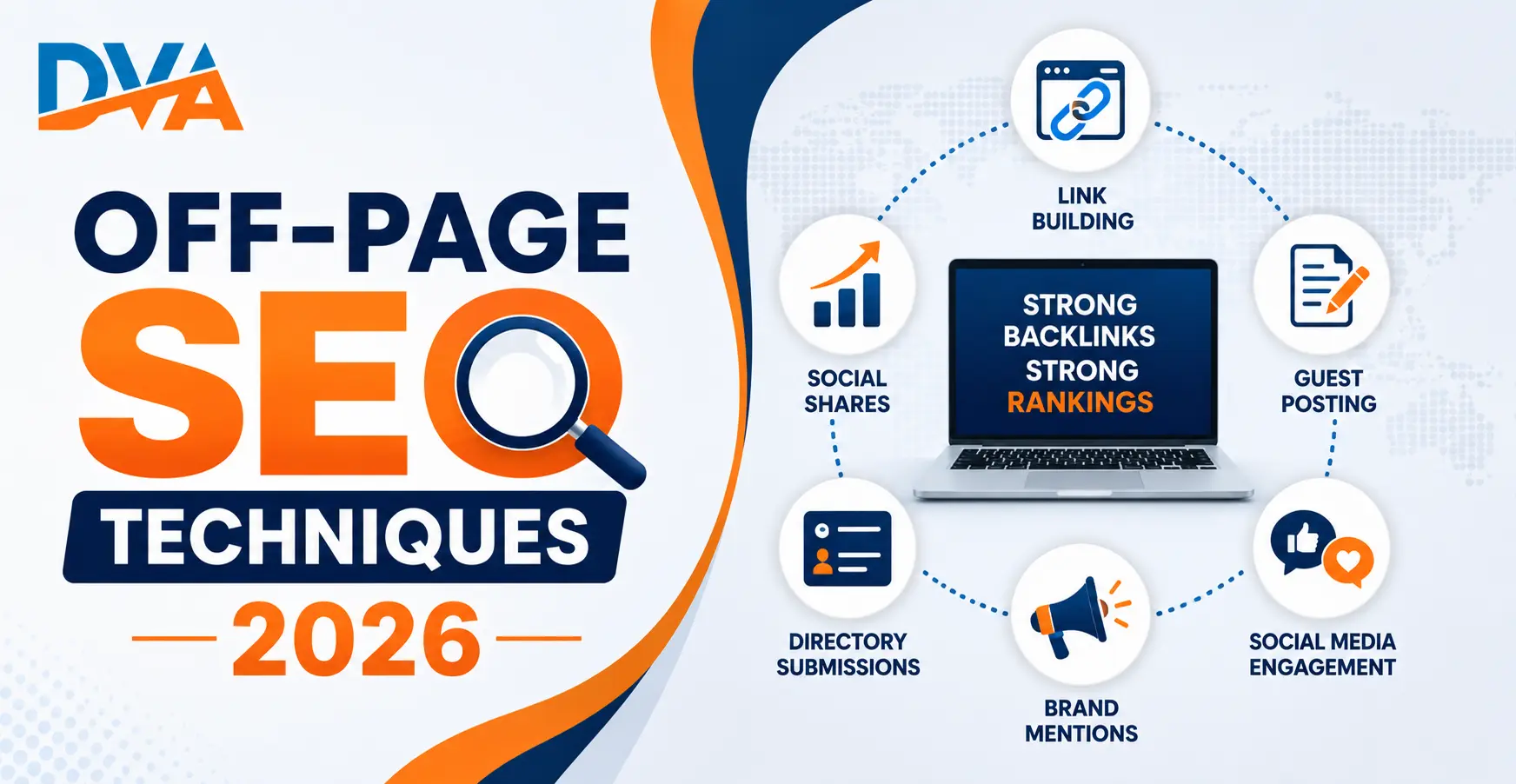
What is Off-Page SEO and Why Does It Still Matter in 2026?
Off-page SEO refers to all the actions taken outside your own website that affect how Google perceives its trustworthiness and authority. The most important off-page signal is backlinks: links from other websites pointing to yours. But off-page SEO in 2026 also includes brand mentions, online reviews, social signals, and the broader reputation of your business across the internet. While on-page SEO tells Google what your website is about, off-page SEO tells Google whether your website is trustworthy enough to show to searchers.
Google’s search algorithm uses off-page signals to answer a fundamental question: among all the pages covering this topic, which one does the rest of the internet trust most? A website that earns links from credible, relevant sources demonstrates that real people and organisations find it valuable enough to reference. This is the core logic behind why off-page SEO still matters and why it will continue to matter: Google is trying to surface the most trusted results, and trust is largely built through external validation.
The challenge is that many off-page tactics that were widely used between 2010 and 2018 are now either ineffective or actively penalised. Google’s link spam policies explicitly identify buying links, participating in link schemes, and other manipulative link-building practices as violations that can result in manual actions against a website. Understanding what works versus what is risky is the starting point for any off-page SEO strategy in 2026. Learn how on-page SEO and off-page SEO work together in our complete on-page SEO checklist for 2026.
Technique 1: Guest Posting on Topically Relevant Websites
Guest posting means writing and publishing an article on someone else’s website, with a link back to your site included in the content or author bio. When done correctly, on websites that are genuinely relevant to your topic and have real editorial standards, guest posting earns high-quality contextual backlinks that carry significant authority. The key word is relevant: a guest post on a topically related website sends a strong signal to Google; a guest post on an unrelated site for the sole purpose of a link sends a weak or suspicious signal.
The approach that works in 2026 is finding websites that your target audience actually reads, pitching genuinely useful article ideas that fit that site’s content, writing high-quality original content for them, and earning a contextual link naturally within that content. This is fundamentally different from mass guest posting on low-quality sites purely for link volume. Our updated guest posting sites list for high-quality backlinks covers a range of platforms where real editorial standards apply.
When evaluating a guest posting opportunity, check whether the site has genuine organic traffic, whether it has editorial standards and reviews pitches selectively, and whether the content it publishes is useful and well-written. A single guest post on a credible, relevant website is worth far more than fifty guest posts on low-quality sites that exist primarily to sell links.
Technique 2: Digital PR and Earning Editorial Backlinks
Digital PR is the practice of earning coverage and mentions in online publications, news websites, and industry media by creating genuinely newsworthy content, data, or stories. When a respected digital publication writes an article about your research, your expert opinion, or a unique dataset you compiled, and links back to your website as the source, this earns one of the highest-quality backlinks available. Editorial links from real publications are among the strongest off-page SEO signals that exist in 2026.
Digital PR works by identifying what journalists, bloggers, and content creators in your industry are covering and then providing them with something genuinely useful: original research, an expert perspective on a trending topic, a compelling data point, or a useful resource they can reference in their own content. This requires understanding your audience and your industry well enough to create something that real publications want to feature. For a digital marketing training institute, this might mean publishing research on job market trends, salary data, or skill demand in Tamil Nadu that journalists covering education or careers find useful.
The difference between digital PR and traditional outreach is the quality standard. Digital PR is built around genuinely newsworthy and useful content. Traditional mass outreach sends the same template email to thousands of websites asking for links. The first approach earns high-authority editorial links from real publications. The second rarely earns anything valuable and can create a pattern of low-quality link requests that looks manipulative to Google.
Technique 3: Resource-Worthy Content That Earns Natural Links
The most sustainable form of off-page SEO is creating content so comprehensive, accurate, and useful that other websites naturally link to it as a reference. When you publish the definitive guide on a topic in your industry, a free tool that helps people solve a specific problem, or an original research report with data that other content creators want to cite, you create a durable asset that attracts links over time without ongoing outreach effort. This type of content earns links because it genuinely deserves them.
100% Placement Support
Get Placed After Your Digital Marketing Course at DVA Coimbatore
Resume building, interview prep, and direct company tie-ups. Real placements, not promises.
The practical challenge is that resource-worthy content requires significant investment. A genuinely useful free tool, an original survey covering an industry topic, or a comprehensive guide that covers a subject more completely than anything else available takes real time and expertise to create. But the link-earning results compound over time. A resource that earns 10 organic links in its first year may earn another 20 in the second as its rankings improve and more people discover and cite it.
Skyscraper content is a related approach: identifying pages that already rank well and have earned significant links, then creating a substantially better version of that content, and reaching out to the sites linking to the original to show them the improved alternative. This works because the websites already linking to that type of content have demonstrated their interest in referencing it. Presenting them with a clearly superior version gives them a concrete reason to update their link. Read our guide to understanding how SEO works to see how on-page quality and off-page authority work together to build strong organic rankings.
Technique 4: Local Business Citations and Listing Management
For local businesses in Coimbatore and across Tamil Nadu, consistent business citations across relevant directories and listing platforms are a foundational off-page SEO requirement. A citation is any online mention of your business name, address, and phone number (NAP). Consistent NAP information across Google Business Profile, JustDial, Sulekha, IndiaMART, and other relevant business directories signals to Google that your business is real, established, and geographically located where you claim to be. Inconsistent or incomplete citations create confusion and weaken local search rankings.
The most important local citation is a fully optimised Google Business Profile. Beyond that, prioritise directories that are relevant to your specific business type and have genuine traffic. A digital marketing training institute in Coimbatore benefits most from being listed on education directories, local business directories covering Coimbatore, and digital marketing industry platforms. Listing on hundreds of generic directories with no real traffic or editorial standards adds minimal value and can create a pattern of low-quality citations that does not reflect well on your business. Our guide to business listing sites for improving local SEO rankings covers the platforms that carry genuine weight for Indian businesses.
Technique 5: Brand Mention Monitoring and Link Reclamation
Unlinked brand mentions are instances where another website mentions your business, product, or content by name without including a link to your website. These are one of the easiest off-page SEO opportunities to capture because the website is already familiar with and evidently positive about your brand. Converting an unlinked mention into a linked citation requires simply reaching out to the author or editor and requesting that they add a link to the relevant mention. This converts an existing relationship into a concrete SEO signal.
Use Google Alerts, Google Search for your brand name, or monitoring tools to identify new mentions of your business across the web. When you find an unlinked mention on a credible website, reach out with a brief, friendly message pointing out the mention and suggesting that a link would be helpful for their readers who want to learn more. The conversion rate for this outreach is significantly higher than cold link requests because the website has already demonstrated familiarity and positive intent toward your brand.
Link reclamation is the related practice of finding links that used to point to your website but are now broken, pointing to a removed page, or redirecting incorrectly, and reaching out to have them corrected or updated. Tools like Google Search Console show you inbound links and can help identify patterns of broken link referrals that represent recoverable link equity.
Technique 6: Broken Link Building
Broken link building involves finding pages on other websites that link to resources which no longer exist (returning 404 errors), creating or identifying your own content that serves as a replacement for the dead resource, and reaching out to the website owner to suggest they update the broken link with a link to your working, relevant content. This works because you are solving a genuine problem for the website owner (a broken link on their page is a user experience issue) while earning a relevant backlink in return.
The practical process involves finding relevant websites in your industry, checking them for broken outbound links (using browser extensions or crawling tools), identifying which of your existing content could serve as a natural replacement for the dead resource, and reaching out with a specific, helpful suggestion. This approach has a meaningful success rate because the request is framed as a helpful correction rather than a link request, and the website owner has a clear incentive to fix the broken link.
Off-Page SEO Techniques: What Works vs. What Has Lost Effectiveness in 2026
| Technique | Effective in 2026? | Reason |
|---|---|---|
| Guest posting (relevant, quality sites) | Yes | Earns contextually relevant editorial links |
| Digital PR and press coverage | Yes — highest impact | High-authority editorial links from real publications |
| Resource content that earns natural links | Yes | Builds durable link-earning assets over time |
| Local business citations | Yes — essential for local | Core trust signal for local search rankings |
| Brand mention reclamation | Yes | Converts existing goodwill into concrete link signals |
| Broken link building | Yes — moderate impact | Solves a real problem for website owners |
| Mass directory submission | No | Most directories are low-quality with no real traffic or authority |
| Blog commenting for backlinks | No | Almost always nofollow; widely abused as spam |
| Article spinning and mass submission | No — risk of penalty | Violates Google spam policies; can harm rankings |
| Paid links from link farms | No — penalty risk | Explicitly violates Google link spam policies |
Off-Page SEO Mistakes That Still Damage Websites in 2026
Buying links from link farms or private blog networks. Google’s link spam policies explicitly identify buying links that pass PageRank as a violation. Sites that sell links in bulk, private blog networks (PBNs), and link exchange schemes are all covered by this policy. Google’s SpamBrain algorithm and manual review teams actively identify these patterns. A website that builds its backlink profile primarily through purchased or artificially acquired links faces either ranking suppression or a manual penalty that can take months to recover from.
Focusing on link quantity over link quality. One genuine editorial link from a credible, relevant website that real people read is worth more to your off-page SEO than one hundred links from low-traffic, low-authority directories that exist primarily to sell links. A backlink profile with a small number of genuinely high-quality, contextually relevant links consistently outperforms a large backlink profile of low-quality links. Track the quality of your link sources, not just the total count.
Using identical anchor text across multiple backlinks. Natural backlink profiles include a variety of anchor text: brand names, generic phrases, URLs, and a relatively small proportion of exact-match keyword anchor text. When a large proportion of your backlinks all use exactly the same keyword-rich anchor text, it looks like a deliberate manipulation of Google’s anchor text signals rather than organic link earning. This pattern can trigger algorithmic suppression even if none of the individual links are obviously problematic.
Ignoring off-page SEO entirely in favour of on-page only. Many Tamil Nadu businesses and beginner SEOs spend all their time on on-page optimisation and content creation while doing nothing to build off-page authority. Strong on-page SEO on a site with no external trust signals can get a page indexed and potentially ranking for very low-competition queries. But competing for meaningful search volume almost always requires off-page authority built through real links from real sources. Both are necessary for a complete SEO strategy. If you are ready to learn both on-page and off-page SEO with hands-on practice, the SEO course training in Coimbatore covers both areas with live project work on real websites.
Related Posts
Conclusion: Build Off-Page Authority the Right Way
The off-page SEO techniques that actually work in 2026 are all grounded in the same principle: earn genuine external validation from sources that your target audience and Google both trust. Guest posting on relevant quality sites, earning editorial coverage through digital PR, building resource-worthy content, managing local citations consistently, reclaiming brand mentions, and building broken links are the approaches that deliver real results. They take longer and require more effort than buying links from directories. But they also build something durable that compounds over time rather than creating ongoing penalty risk.
Start with the technique that is most achievable given your current resources and domain authority. For most Tamil Nadu businesses and beginners, local citation management and guest posting on relevant industry sites are the most practical starting points. Build from there as your content library and domain authority grow.
If you want to learn how to implement these off-page SEO techniques on real websites with expert guidance, enroll in the digital marketing course at Digital Vishnu Academy in Coimbatore and build your SEO skills with hands-on project work from day one.
Off-page work comes after the basics. See where it fits in our complete SEO checklist.
Frequently Asked Questions About Off-Page SEO in 2026
What is the most effective off-page SEO technique in 2026?
Digital PR and earning editorial backlinks from real publications is the highest-impact off-page SEO technique in 2026 because it earns links from authoritative, high-traffic sources that carry significant trust signals. Guest posting on topically relevant websites with genuine editorial standards is the most consistently achievable high-impact technique for most businesses. For local businesses in Tamil Nadu, fully optimised Google Business Profile and consistent citations across relevant directories are essential starting points before any link-building effort.
Does guest posting still work for SEO in 2026?
Yes, guest posting on genuinely relevant, high-quality websites with real editorial standards remains an effective off-page SEO technique in 2026. What no longer works is mass guest posting on low-quality sites for link volume alone. The difference is relevance and quality: a guest post on a credible website that your target audience reads earns a valuable contextual backlink. A guest post on a low-traffic, low-authority site that exists primarily to sell links earns very little and can look manipulative to Google.
Are directory submission links still valuable for SEO?
Generic mass directory submission is no longer a meaningful off-page SEO strategy. Most bulk directory sites have low authority, no real traffic, and exist primarily as link-selling schemes. However, listing your business on authoritative, relevant directories does still have value. For Indian businesses, being listed on platforms like JustDial, Sulekha, and IndiaMART with consistent NAP information supports local SEO. The distinction is between quality, relevant directories and mass generic directory submission.
How do I know if a backlink is high quality?
A high-quality backlink comes from a website that has real organic traffic, genuine editorial standards, is topically relevant to your website, and has a credible and established online presence. Check whether the site appears in Google search results for relevant queries, whether real people read and link to its content, and whether the link appears within genuinely relevant content rather than in a footer, sidebar, or link list. Low-quality links come from sites with no real traffic, no editorial standards, and content that exists primarily to host links.
How long does off-page SEO take to show results?
Off-page SEO results typically become visible in Google rankings over a period of weeks to months depending on the quality and authority of the links earned and the competitiveness of the target keywords. High-authority editorial links from major publications can show a ranking impact within weeks. A gradual, consistent link-building programme on a newer domain may take 4 to 6 months to produce visible ranking improvements. Google needs time to discover, crawl, and process new links, and to assess their relevance and quality before incorporating them fully into ranking signals.