
Starting a blog in India is one of the most accessible ways to earn money online in 2026. You do not need a big budget or a technical background to begin. What you do need is a clear plan, the right tools, and consistent effort over time.
This guide walks you through every step to start a blog and make money in India, from choosing your niche to earning your first rupees of blogging income.
Quick Answer: To start a blog and make money in India, choose a specific niche you understand well, buy a domain and hosting, install WordPress, write SEO-optimised posts consistently, grow your traffic to at least 5,000 to 10,000 monthly visitors, and then monetise through Google AdSense, affiliate marketing, or selling your own digital products. Expect 6 to 12 months before income becomes meaningful.
Key Takeaways
- Choose a niche before you start: broad topics make it hard to rank and hard to earn
- WordPress on paid hosting is the best platform for Indian bloggers who want to monetise
- SEO is your main traffic engine: without it, almost no one will find your blog
- Most bloggers start earning between 6 to 12 months after publishing consistently
- Google AdSense and affiliate marketing are the two most popular income streams for Indian bloggers
Can You Really Make Money from Blogging in India?
Yes, you can make money from blogging in India. Indian bloggers are earning from a few thousand rupees per month to several lakhs, depending on niche, traffic, and monetisation strategy. Blogging is not a shortcut to quick income. It rewards people who publish useful content consistently, learn basic SEO, and stick with it for at least 6 to 12 months before expecting significant earnings.
Blogging income in India typically comes from ads, affiliate links, sponsored content, digital products, and freelance services. The key is picking a niche that has search demand, writing content people are actively searching for, and monetising that traffic once it builds.
If you have a skill, hobby, or knowledge area that others want to learn about, blogging can turn that into a real income stream. The barrier to entry is low. The barrier to success is consistency and strategy.
Step 1: Choose a Profitable Niche for Your Blog
A blogging niche is the specific topic your blog covers. The most common beginner mistake is choosing a topic that is too broad. Instead of writing about health, write about yoga for working women. Instead of technology, cover budget smartphones under Rs. 15,000. A focused niche helps you rank faster, build a loyal audience, and attract relevant advertisers and affiliate offers.
Good niche ideas for Indian bloggers include:
- Personal finance: budgeting, investing, and saving tips for Indian readers
- Education and careers: exam preparation, government jobs, and course reviews
- Health and fitness: home workouts, Indian diet plans, and yoga
- Food and recipes: regional Indian recipes and healthy cooking
- Technology: product reviews, how-to guides, and app comparisons
- Travel: Indian destinations and budget travel tips
- Digital marketing: tutorials, tools, and career advice
Pick a niche you know well and that has search volume on Google. Use free tools like Google Keyword Planner or Google Trends to confirm that people in India are actively searching for your topic before you commit to it.
Step 2: Choose Your Blogging Platform
The best platform for a monetisable blog in India is WordPress.org with your own domain and hosting. It gives you full control, supports all monetisation methods, and is trusted by over 43% of all websites globally according to WordPress.org. Free platforms like Blogger work for practice but limit your earning potential and professional credibility over time.
Here is a quick comparison of the main options available to Indian bloggers:
| Platform | Cost | Control | Monetisation | Best For |
|---|---|---|---|---|
| WordPress.org (self-hosted) | Hosting + domain (paid) | Full control | All methods | Serious bloggers |
| Blogger (Google) | Free | Limited | AdSense only | Complete beginners |
| WordPress.com (free plan) | Free | Very limited | Restricted | Personal hobby blogs |
| Medium | Free | No ownership | Partner program only | Writers building an audience |
For serious monetisation in India, WordPress.org on paid hosting is the clear recommendation. Blogger is a useful free option to learn the basics before investing in a paid setup.
If you want to explore blogging for free first before spending money, read our guide on how to create a free Blogger website step by step.
Step 3: Set Up Your Blog with a Domain and Hosting
To set up a self-hosted WordPress blog, you need two things: a domain name (your blog address, such as yourblog.com) and a web hosting plan (the server where your blog files live). In India, domain names typically cost around Rs. 500 to Rs. 999 per year, and basic hosting plans start from around Rs. 100 to Rs. 300 per month. Most hosting providers include a free domain with their annual hosting plan.
Here is the basic process to get your blog live:
- Choose your domain name: Keep it short, easy to spell, and relevant to your niche. A .com or .in extension both work well for Indian audiences.
- Buy a hosting plan: Popular hosting providers used by Indian bloggers include Hostinger, BigRock, and GoDaddy. Always compare renewal rates, not just the introductory offer price.
- Install WordPress: Most hosting providers offer a one-click WordPress installation from within the hosting control panel. No coding required.
- Set up a theme: Choose a clean, mobile-friendly theme. Free options like Astra and GeneratePress are solid starting points that load fast.
- Install basic plugins: You will need an SEO plugin (Rank Math or Yoast SEO), a caching plugin for speed, and a basic security plugin.
Your blog is technically ready once WordPress is installed and a theme is active. The real work starts with creating content that readers and search engines both value.
100% Placement Support
Get Placed After Your Digital Marketing Course at DVA Coimbatore
Resume building, interview prep, and direct company tie-ups. Real placements, not promises.
Step 4: Write Content That Attracts Readers
Good blog content answers the exact questions your target readers are typing into Google. Before writing any post, research a specific keyword using Google Keyword Planner to confirm that people are searching for it. Write for the reader first, then optimise for search engines. Helpful, specific, well-structured posts rank far better than generic filler content, especially in competitive niches.
A few content writing rules every new Indian blogger should follow:
- Publish at least one new post per week when starting out
- Each post should be at least 1,000 words and focused on one specific question or topic
- Use clear headings, short paragraphs, and plain language your audience understands
- Add real examples, step-by-step instructions, or screenshots your readers can follow
- Never copy content from other websites, even partially
Learning to write for both readers and search engines is the single most important blogging skill. Our step-by-step guide on how to write SEO-friendly blog posts covers the full process in practical detail.
Step 5: Drive Traffic to Your Blog Using SEO
SEO (Search Engine Optimisation) is the primary way most Indian bloggers get consistent traffic without paying for ads. It means making your posts easy for Google to find, understand, and show to relevant searchers. Good SEO for bloggers includes choosing the right keywords, using them naturally in your content, getting other websites to link to you, and making your blog load fast on mobile devices.
Core SEO actions every new blogger should take:
- Keyword research: Write posts around specific questions people are actively searching for on Google India
- On-page SEO: Use your keyword in the post title, opening paragraph, at least one heading, and the meta description
- Internal linking: Link related posts to each other so Google can understand your blog’s topic structure
- Mobile speed: Over 70% of Indian internet users browse on mobile. A slow-loading blog loses readers and rankings
- Backlinks: Work toward getting other websites to link to your best posts over time by creating genuinely useful content
SEO is one of the most valuable skills a blogger can build. It also forms the backbone of a broader digital marketing strategy that can take your career well beyond blogging if you choose to grow in that direction.
How to Make Money from Your Blog in India
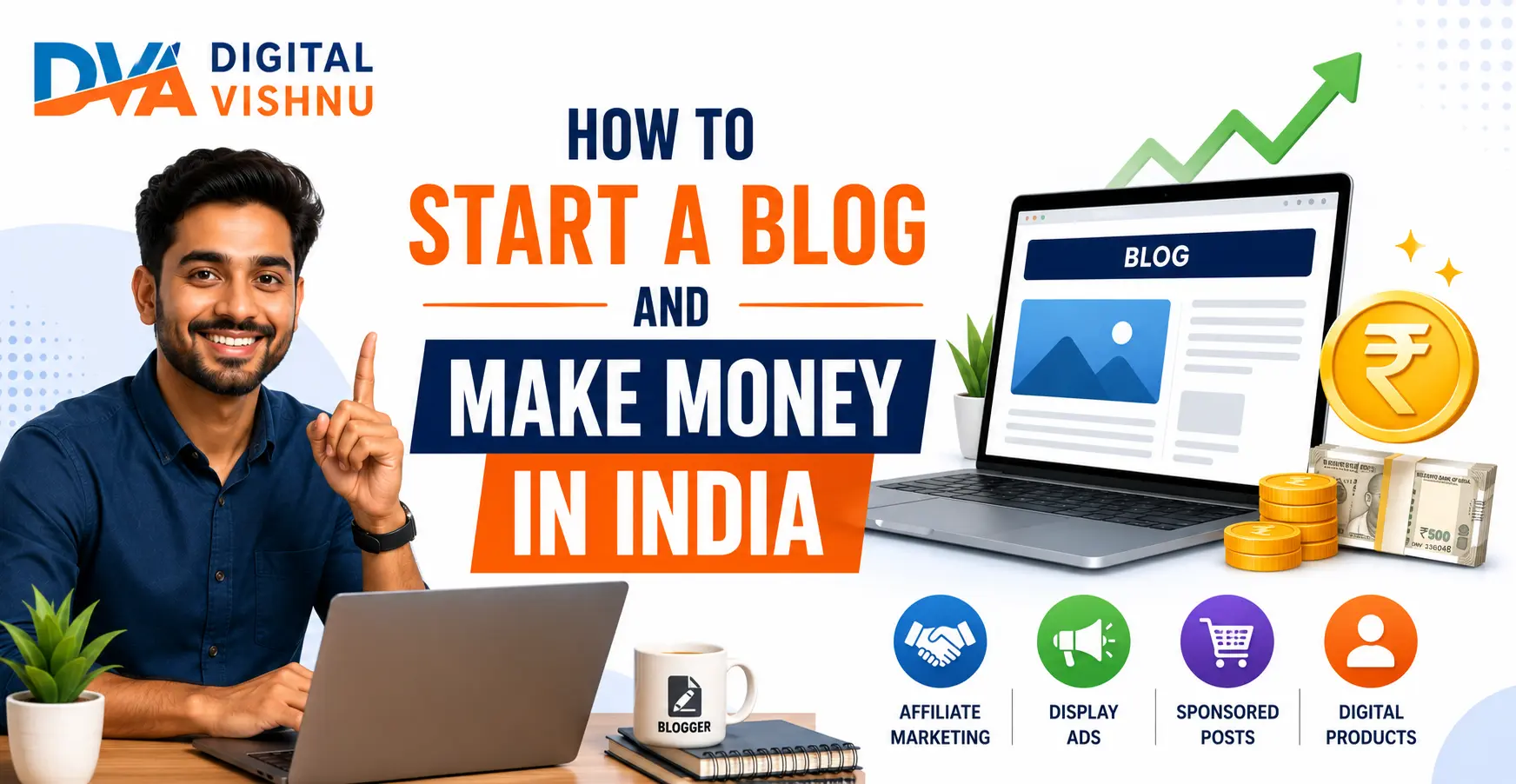
Indian bloggers primarily earn through Google AdSense (display ads), affiliate marketing (earning commission on product recommendations), sponsored posts (brands pay to be featured), selling digital products such as e-books and templates, and offering freelance services like content writing or SEO consulting. Most successful blogs start with AdSense and affiliate marketing and then add other income streams as traffic grows.
Google AdSense: AdSense places display ads on your blog and pays you when visitors see or click them. To apply, your blog needs original content, a clear niche, basic pages (About, Contact, Privacy Policy), and some consistent traffic. Visit Google AdSense to understand their requirements before applying.
Affiliate marketing: You earn a commission when a reader clicks your referral link and purchases a product. The Amazon Associates India programme is popular with beginners because it covers a huge range of products across every niche. If you blog about technology, you can link to smartphones, laptops, and accessories on Amazon.in and earn a percentage on each sale.
Sponsored posts: Brands pay you to write a post featuring their product or service. This works well once you have a loyal, niche audience that brands want to reach.
Digital products: Sell e-books, templates, checklists, or mini-courses that solve specific problems for your readers. Digital products have no inventory cost and can generate passive income.
Freelance services: Many bloggers get hired as freelance content writers, SEO consultants, or social media managers because their published blog demonstrates their skills better than a resume ever could.
Understanding how content drives business decisions helps you plan each blog post as both a traffic asset and a revenue opportunity. Read our guide on what is content marketing and why every business needs it to see how professional content strategy works at a deeper level.
How Long Does It Take to Earn from a Blog in India?
Most beginner bloggers in India start earning a small amount between 6 and 12 months if they publish at least 2 to 4 posts per week and apply basic SEO. Significant income, meaning enough to replace a part-time salary, usually takes 12 to 24 months of consistent effort. There is no guaranteed timeline. Blogs in specific, low-competition niches can gain traction faster than those in broad, highly competitive ones.
Key factors that affect your timeline include:
- Niche competition: lower competition niches tend to rank faster on Google
- Publishing frequency: more quality posts means more chances to rank and attract traffic
- SEO knowledge: blogs with solid on-page SEO grow faster than those without any optimisation
- Domain age: newer domains take time to build authority in Google’s eyes
- Content quality: helpful, specific posts consistently outperform thin or generic content
Common Blogging Mistakes Beginners Make in India
The most common beginner mistake is choosing a niche that is too broad or has no real audience in India. The second most common is stopping after a few weeks because results do not arrive immediately. Blogging rewards patience. Other frequent errors include skipping keyword research entirely, copying content from other blogs, writing posts that are too short, and applying for AdSense before the blog has enough original content.
- No keyword research: Writing posts nobody searches for leads to no traffic, no matter how good the writing is
- Too many topics: Covering cricket, cooking, and coding on one blog confuses both readers and Google
- Inconsistency: Publishing 10 posts and then going silent for two months stops your blog’s growth momentum
- Applying for AdSense too early: Apply only after your blog has at least 15 to 20 quality posts and some consistent traffic
- Ignoring mobile experience: A blog that looks broken or loads slowly on phones will not retain Indian readers
Want to Grow Your Blog Faster? Learn Digital Marketing Skills
Blogging and digital marketing go hand in hand. Learning SEO, content marketing, and social media marketing makes every aspect of growing a blog easier and faster. Digital Vishnu Academy’s digital marketing course in Coimbatore covers all these skills with hands-on training and real projects. Enquire today to find out how these skills can support your blogging journey.
Frequently Asked Questions
How much money can a blogger make in India?
Blogging income in India varies widely. Beginners typically earn Rs. 5,000 to Rs. 20,000 per month from AdSense and affiliate links after 6 to 12 months of consistent publishing. Established bloggers with high traffic and strong monetisation can earn several lakhs per month. Income depends on niche choice, monthly traffic volume, the monetisation methods used, and the consistency of content publishing.
Which blogging platform is best for beginners in India?
For beginners who want to start at zero cost, Blogger is a safe starting point to learn the basics. Once you are ready to earn seriously, switching to WordPress.org with your own domain and hosting is the right move. WordPress gives you full control over your blog, your content, and your income streams. Free platforms restrict monetisation options and are not seen as professional by most brands and advertisers.
Do I need to know coding to start a blog?
No. WordPress and Blogger are designed for non-technical users. You can set up a blog, choose a theme, and publish posts without writing a single line of code. The skills you actually need are keyword research, content writing, and a basic understanding of SEO. These are learnable skills that anyone can develop with practice and a good course or self-study plan.
Can I blog in Hindi or Tamil and still make money?
Yes. Hindi and Tamil blogs have a large and growing audience in India. Google AdSense supports Indian regional languages. Affiliate programmes work in any language. Regional-language blogs often face less competition than English blogs in the same niche, which means they can sometimes rank faster on Google India and build a loyal audience more quickly in their local markets.
How many posts do I need before applying for Google AdSense?
There is no official minimum post count from Google, but most blogs that get approved have at least 15 to 25 original, well-written posts. Your blog should also have an About page, a Contact page, and a Privacy Policy. AdSense reviewers look for original content, a clear niche, and genuine usefulness to readers. Avoid applying if your content is thin, copied, or your blog was created very recently.
Is affiliate marketing better than AdSense for Indian blogs?
Both have their place. AdSense pays for ad impressions and clicks, which works well when you have high traffic volume. Affiliate marketing pays commissions on actual sales, meaning you can earn more per visitor if you are in the right niche like technology, finance, or health. Most successful Indian bloggers combine both income streams rather than relying on one alone, which creates more stable and diversified income.
What is the best niche for blogging in India in 2026?
Strong blogging niches in India in 2026 include personal finance, health and fitness, education and competitive exams, technology reviews, digital marketing, food and recipes, and travel. The best niche for you personally is one that has real search demand on Google India and one you have enough knowledge and genuine interest in to write about consistently for 12 to 24 months without losing motivation or running out of ideas.