
What is Digital Marketing?
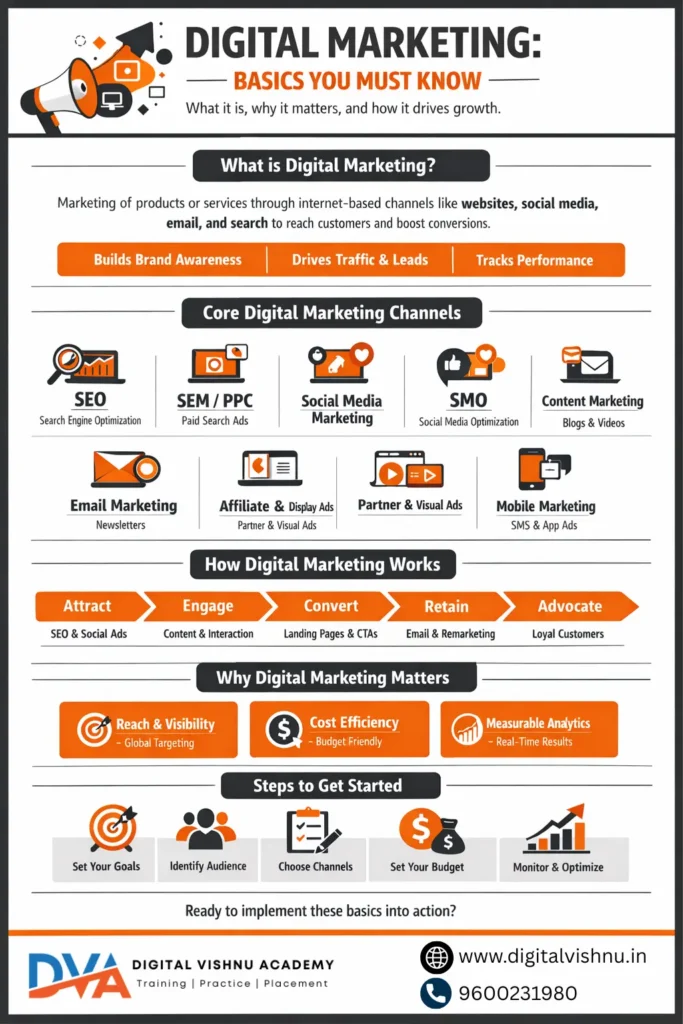
Digital marketing is the practice of promoting brands and products using digital channels like the internet, mobile devices, and electronic platforms. It includes activities such as posting on social media, running ads on Google, sending emails, and creating blog content. Unlike traditional marketing that uses TV, newspapers, or billboards, digital marketing focuses on reaching people online where they spend most of their time.
The main goal of what is digital marketing is to connect businesses with their target audience at the right time and place. When done correctly, it helps companies build relationships with customers, understand their needs, and deliver personalized messages. For students and professionals in Coimbatore looking to master these skills, enrolling in a digital marketing course in Coimbatore provides hands-on training in all essential areas.
Key Takeaway
- Digital marketing is the use of internet-based channels like websites, social media, and email to promote products and connect with customers
- Digital marketing basics include understanding SEO, SEM, social media optimization, social media marketing, content creation, email campaigns, and online advertising
- Online marketing meaning refers to all marketing activities conducted through digital platforms with measurable, data-driven results
- Digital marketing helps businesses through cost-effective advertising, precise audience targeting, and trackable performance metrics
- Essential skills include content writing, basic design, data analysis, communication, and proficiency with marketing tools
- Getting started requires learning fundamentals, choosing a focus area, taking courses, practicing with real projects, and staying updated
- Digital Vishnu Academy in Coimbatore provides comprehensive digital marketing training in all aspects of digital marketing with practical, hands-on experience
- Career opportunities in digital marketing continue growing as more businesses shift their focus to online channels
- Understanding what is digital marketing is essential for anyone looking to succeed in today’s internet-driven business environment
The Difference Between B2B and B2C Digital Marketing
Digital marketing works differently depending on who you are selling to. Business-to-business (B2B) marketing targets other companies, while business-to-consumer (B2C) marketing targets everyday customers.
- B2B marketing involves longer sales cycles because multiple decision-makers are involved. The focus is on building trust and relationships through educational content, webinars, and detailed product information.
- B2C marketing targets individual customers who make quick purchasing decisions. The messaging is more emotional, urgent, and focused on benefits like discounts, convenience, and lifestyle improvements.
Both types rely on digital channels, but the strategies and content differ based on audience behavior and needs.
The Benefits of Digital Marketing
Understanding what is digital marketing means recognizing its powerful advantages over traditional methods. Here are the key benefits that make it essential for modern businesses.
Reach a Large Demographic
Digital marketing allows businesses to reach people across cities, countries, and continents without physical boundaries. A single social media post or blog article can attract thousands of viewers from different locations. Small businesses in Coimbatore can compete with global brands by using the right online strategies.
Cost Efficiency
Compared to TV ads, radio spots, or print campaigns, digital marketing is much more affordable. Creating a blog post, posting on Instagram, or sending an email costs little to nothing. Paid ads on Google or Facebook also allow businesses to set their own budgets and control spending. This makes it ideal for startups and small businesses with limited resources.
Results Are Measurable
One of the biggest advantages of what is digital marketing is the ability to track every action. Tools like Google Analytics show how many people visit your website, where they come from, and what they do on your site. You can measure clicks, conversions, and sales in real time. This data helps businesses improve their campaigns and make smarter decisions.
Easier Personalization for Customers
Digital marketing collects customer data such as age, location, interests, and online behavior. This information allows businesses to create personalized messages for different audience segments. For example, an online store can send product recommendations based on previous purchases. Personalization increases engagement and builds stronger customer relationships.
Opportunity to Engage with Customers at Various Stages
Digital marketing lets businesses interact with customers throughout their buying journey. You can attract new visitors with blog content, nurture leads through email campaigns, and retain customers with loyalty programs. Engaging customers at every stage increases the chances of conversion and repeat purchases.
Easy and Convenient Conversions
With digital marketing, customers can move from seeing an ad to making a purchase in just a few clicks. Social media platforms and websites are connected seamlessly, making the buying process smooth and convenient. Mobile-friendly websites and one-click payment options further simplify conversions.
Aligns Digital Marketing Efforts with Business Goals
A well-planned digital marketing strategy aligns with broader business objectives like increasing revenue, building brand awareness, and improving customer retention. By focusing on the right tactics and tracking key metrics, businesses can set realistic goals and achieve measurable results across all teams.
Is Digital Marketing the Same as Online Marketing?
Many people use the terms “digital marketing” and “online marketing” interchangeably, but they are not exactly the same. Understanding what is digital marketing requires knowing the distinction.
Digital Marketing
Digital marketing is the umbrella term that includes all marketing activities using digital channels. This covers both online and offline channels such as TV ads, radio spots, digital billboards, SMS marketing, and mobile apps. If it uses electronic devices or the internet, it falls under digital marketing.
Online or Internet Marketing
Online marketing is a subset of digital marketing that only includes internet-based activities. This includes search engine optimization, social media marketing, email campaigns, and pay-per-click advertising. All online marketing is digital marketing, but not all digital marketing is online marketing.
Challenges in Digital Marketing
While digital marketing offers many benefits, it also comes with challenges that businesses must navigate carefully.
Changing algorithms on platforms like Google and Facebook can impact your website rankings and ad performance. Staying updated with these changes requires constant learning and adaptation. Data privacy and compliance regulations like GDPR require businesses to handle customer information responsibly. Competition is fierce because anyone can start marketing online, making it harder to stand out. Measuring ROI can be difficult for long-term strategies like content marketing and SEO. Customer trust is harder to earn online due to the overwhelming amount of content and advertisements people see daily.
Overcoming these challenges requires strategic planning, ongoing education, and the right tools. Learning through a structured SEO course in Coimbatore helps professionals understand algorithm updates and ranking factors.
12 Types of Digital Marketing
What is digital marketing without understanding its different forms? There are many types, each serving a unique purpose in reaching and engaging customers.
Owned Media
Owned media refers to digital assets that your business controls, such as websites, blogs, and email lists.
1. Content Marketing
Content marketing focuses on creating valuable and educational content to attract and engage your target audience. Instead of directly promoting products, it builds trust by providing helpful information. Examples include blog posts, eBooks, guides, infographics, podcasts, and videos. For businesses looking to improve their visibility, creating high-quality content combined with strategies from article submission sites can boost online reach.
2. Email Marketing
Email marketing involves sending targeted messages directly to subscribers’ inboxes. It includes newsletters, promotional offers, welcome emails, and follow-up messages. Personalized email campaigns have high engagement rates and help businesses nurture leads effectively. To master this channel, consider enrolling in an email marketing course in Coimbatore to learn best practices and automation tools.
Rated by Students
4.9/5 Rating. 500+ Students Trust Digital Vishnu Academy for Their Career
Practical training. Real projects. Placement assistance that actually works.
3. Search Engine Optimization (SEO)
SEO is the process of optimizing your website to rank higher in search engine results. It involves on-page SEO (optimizing content and keywords), off-page SEO (building backlinks from quality sources like guest posting sites), and technical SEO (improving site speed and mobile responsiveness). Good SEO increases organic traffic and improves online visibility.
Paid Media
Paid media involves paying for advertising space on digital platforms to reach a larger audience quickly.
4. Search Engine Marketing (SEM)
SEM includes paid advertisements that appear at the top of search engine results pages. Businesses bid on keywords, and their ads show when users search for those terms. Google Ads and Microsoft Ads are the most popular SEM platforms. Learning SEM course in Coimbatore helps professionals run effective paid campaigns.
5. Affiliate Marketing
Affiliate marketing recruits partners to promote your products or services in exchange for a commission on sales. Affiliates use their platforms and audiences to drive traffic and conversions for your business. This model works well for eCommerce brands and online services.
6. Pay Per Click (PPC)
PPC advertising charges businesses each time someone clicks on their ad. It includes search ads, display ads, and social media ads. Platforms like Google Ads, Facebook Ads, and YouTube Ads allow businesses to target specific demographics and track performance in real time.
Earned Media
Earned media is the exposure your business gains through word-of-mouth, shares, reviews, and mentions.
7. Social Media Marketing
Social media marketing promotes your business organically on platforms like Facebook, Instagram, LinkedIn, and YouTube. It involves posting engaging content, responding to comments, and building a community around your brand. A social media marketing course in Coimbatore teaches effective strategies for audience engagement and growth.
8. Influencer Marketing
Influencer marketing partners with popular content creators to promote your brand to their followers. Influencers have built trust with their audience, making their recommendations more impactful. Businesses typically pay influencers a flat fee for promotions.
9. Native Advertising
Native advertising creates ads that blend seamlessly with the platform’s content. They look like regular posts but are labeled as “sponsored” or “promoted.” Native ads aim to engage users without appearing overly promotional.
Other Marketing
10. Marketing Automation
Marketing automation uses software to automate repetitive tasks like sending emails, posting on social media, and tracking customer behavior. Tools powered by artificial intelligence and machine learning help businesses save time and deliver personalized experiences at scale.
11. Mobile Marketing
Mobile marketing targets users on smartphones and tablets through SMS, mobile apps, and mobile-optimized websites. Since most people access the internet on mobile devices, optimizing for mobile is essential. Businesses can also leverage Google My Business course in Coimbatore to improve local mobile search visibility.
12. Video Marketing
Video marketing promotes brands through short-form or long-form videos on platforms like YouTube, TikTok, and Instagram. Videos are highly engaging and can explain complex ideas quickly. Sharing videos on video submission sites increases exposure and backlinks.
How to Do Digital Marketing
Learning what is digital marketing also means knowing how to implement it effectively. Follow these steps to create successful campaigns.
1. Define Your Goals
Start by setting clear, measurable, and achievable goals. Do you want to increase website traffic, generate leads, or boost sales? Your goals will guide your strategy and help you track progress. Important metrics include impressions, clicks, conversions, and return on investment.
2. Identify Your Target Audience
Understand who your customers are, what they need, and where they spend time online. Create audience personas that include demographics, interests, and pain points. This helps you craft messages that resonate with your audience.
3. Set a Budget for Each Digital Channel
Allocate your budget wisely across different channels based on your goals and audience. Decide how much to spend on paid ads, content creation, and tools. A flexible budget allows you to adjust spending as you learn what works best.
4. Select Your Digital Marketing Channels
Choose channels where your target audience is most active. For example, if targeting young adults, focus on Instagram and TikTok. If targeting professionals, LinkedIn is ideal. A mix of organic and paid strategies works best for long-term success. You can also improve your online presence by listing your business on business listing sites.
5. Optimize Your Digital Assets for Mobile
Most users browse the internet on mobile devices, so your website and content must be mobile-friendly. Ensure fast loading times, responsive design, and easy navigation. Mobile optimization improves user experience and search rankings.
6. Refine Your Marketing Efforts
Digital marketing is an ongoing process. Continuously monitor your performance using analytics tools and adjust your strategies based on data. Stay updated with trends and algorithm changes to remain competitive.
7. Create Cohesive Campaigns Across Multiple Channels
Don’t rely on a single channel. Use a combination of social media, email, SEO, and paid ads to reach your audience at different touchpoints. Consistent messaging across channels strengthens brand recognition and trust. Additionally, promoting content through social bookmarking sites and directory submission sites enhances visibility.
Digital Marketing Trends for the Future
Understanding what is digital marketing also means staying ahead of emerging trends that shape the industry.
Artificial intelligence and automation are transforming how businesses create content, analyze data, and personalize customer experiences. Voice search optimization is becoming crucial as more people use smart devices like Alexa and Google Assistant. Interactive content such as quizzes, polls, and augmented reality experiences boost engagement. Personalization at scale allows businesses to deliver customized messages to thousands of customers simultaneously. Sustainability and ethical marketing are growing in importance as consumers prefer brands that align with social and environmental values.
Staying informed about these trends ensures your marketing strategies remain effective and relevant. Engaging with communities on forum submission sites and blog commenting sites also keeps you connected with industry discussions.
Rely on a Powerful Platform for Your Digital Marketing Efforts
To succeed in digital marketing, businesses need the right tools and platforms. Marketing automation software, analytics tools, and customer relationship management systems streamline campaigns and improve results. Platforms that integrate multiple channels help manage complex strategies efficiently.
Investing in training and education is equally important. Whether you’re a student, entrepreneur, or professional, learning graphic design courses in Coimbatore or social media optimization course in Coimbatore can enhance your digital marketing skills.
When combined with consistent effort, strategic planning, and continuous learning, digital marketing becomes a powerful tool for business growth. Understanding what is digital marketing and applying its principles effectively opens doors to endless opportunities in the online world.
Frequently Asked Questions
What is digital marketing in simple words?
Digital marketing is the use of online channels like websites, social media, and search engines to promote products and services. It helps businesses reach customers on the internet and build their brand.
What are the main types of digital marketing?
The main types include content marketing, email marketing, SEO, social media marketing, search engine marketing, PPC advertising, influencer marketing, affiliate marketing, video marketing, mobile marketing, and marketing automation.
Is digital marketing a good career?
Yes, digital marketing is a growing field with high demand for skilled professionals. It offers diverse career opportunities in SEO, content creation, social media management, paid advertising, and analytics.
How much does digital marketing cost?
Digital marketing costs vary based on your strategy and goals. Organic methods like content marketing and social media posting are free, while paid ads and tools require a budget. Small businesses can start with as little as a few thousand rupees per month.
Can I learn digital marketing on my own?
Yes, many resources are available online for self-learning. However, structured courses provide hands-on training, certifications, and mentorship that accelerate your learning and career growth.
What is the difference between SEO and SEM?
SEO focuses on improving organic search rankings through content optimization and backlinks, while SEM involves paid search ads that appear at the top of search results. SEO is long-term, and SEM provides immediate visibility.
Why is digital marketing important for small businesses?
Digital marketing levels the playing field by allowing small businesses to compete with larger brands. It is cost-effective, measurable, and helps reach a wider audience without needing a big budget.
What skills do I need for digital marketing?
Key skills include content writing, data analysis, social media management, SEO, paid advertising, email marketing, graphic design, and basic understanding of marketing automation tools.